
- Discount up to 35% for first purchase only this month.
- sales@ysecobeefarmsusa.com
- (+1) 3252088500

Curious what’s actually inside that golden wax? Discover the real raw honeycomb benefits — from its calorie count to antioxidants, heart-health perks, and how to eat it safely. Everything you need before your next bite.
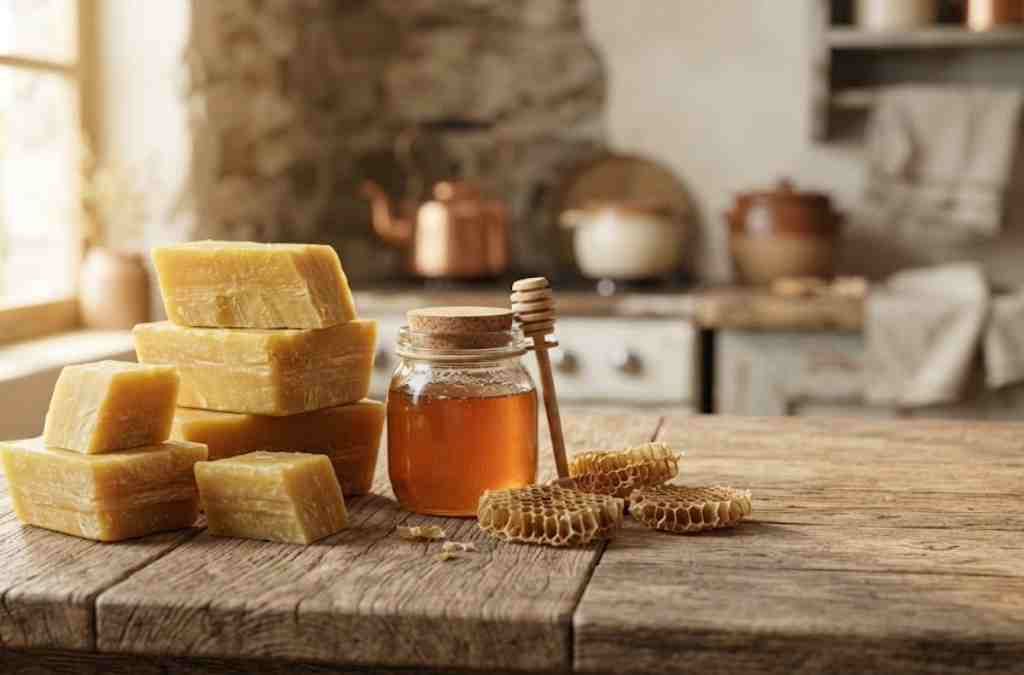
Before you can appreciate raw honeycomb benefits, it helps to know what you’re actually chewing on. Honeycomb is the hexagonal wax structure bees build to store honey, pollen, and sometimes their brood. When you buy it raw and unprocessed, you’re getting the whole package — honey still sealed inside the wax cells, exactly as the bees left it.
Unlike the honey sitting in a squeeze bottle at the grocery store, raw honeycomb hasn’t been heated, filtered, or pasteurized. That matters more than most people realize. Heat destroys a chunk of the natural enzymes and pollen particles that give raw honey its nutritional edge. So when you eat comb honey, you’re getting honey in its most unaltered, bioactive form — plus the wax itself, which carries its own set of compounds worth talking about.
Let’s get the numbers out of the way first, since this is usually what people search for.
The wax itself barely registers on the calorie count. Beeswax is largely indigestible, meaning it moves through your system without being absorbed or broken down for energy. So practically all the calories you’re consuming come from the honey trapped inside, not the comb structure surrounding it.
If you’re tracking macros, treat honeycomb the same way you’d treat regular honey — it’s a carbohydrate-dense food with a small footprint of trace minerals like calcium, potassium, and phosphorus.
This is where things get interesting, because raw honeycomb benefits go beyond “it’s honey with crunch.” The wax component brings something to the table that pure honey doesn’t.
Heart Health Support
Beeswax contains long-chain fatty alcohols — compounds like triacontanol and octacosanol — that have been studied for their effect on cholesterol. Some clinical research has linked these alcohols to meaningful drops in LDL (“bad”) cholesterol alongside increases in HDL (“good”) cholesterol. The catch worth mentioning: most of these studies used concentrated, isolated beeswax alcohols in much higher doses than what you’d get from a spoonful of comb. So while the mechanism is real, don’t expect a tablespoon a day to replace your cholesterol medication.
A Richer Antioxidant Profile
One of the more overlooked raw honeycomb benefits is antioxidant density. Because comb honey isn’t filtered, it retains propolis, pollen fragments, and bee bread that get stripped out during commercial processing. Comparative studies have found comb honey testing meaningfully higher in phenolic content and antioxidant capacity than extracted honey pulled from the very same hives. Translation: gram for gram, the comb version gives you more of the good stuff.
Raw honey is naturally low in moisture and slightly acidic, which makes it a hostile environment for many bacteria. It also contains glucose oxidase, an enzyme that slowly produces hydrogen peroxide — a mild natural antiseptic. This is part of why raw honey has a long history of use on minor wounds and sore throats, though it’s a complement to medical care, not a replacement for it.
A Gentler Effect on Blood Sugar
Compared to refined white sugar, raw honeycomb has a lower glycemic index. That means it raises blood glucose more gradually instead of spiking it. It’s still sugar, and people managing insulin resistance or diabetes should treat it with the same caution as any sweetener — but as a substitute for table sugar, it’s a step in a better direction.
Most people assume comb honey and jarred honey are nutritionally identical. They’re close, but not quite the same.
| Factor | Raw Honeycomb | Filtered/Pasteurized Honey |
|---|---|---|
| Processing | None — straight from the hive | Heated and filtered |
| Enzyme activity | High | Reduced by heat |
| Pollen/propolis content | Present | Often removed |
| Texture | Chewy wax + honey | Liquid only |
| Antioxidant levels | Higher | Lower |
| Shelf stability | Very long, if stored right | Very long |
If your priority is squeezing out every last nutritional advantage, comb wins. If you just want honey for cooking or tea, standard honey is easier to work with.
There’s no official government-recommended dose, but most nutrition-focused sources land on 1–2 tablespoons a day as a sensible upper limit. That gives you meaningful exposure to the bioactive compounds without piling on excess sugar. Since a single tablespoon already carries 15–17 grams of sugar, treating honeycomb as a daily condiment rather than a snack you graze on all day is the smarter approach.
You genuinely can eat the wax — it’s edible, just not digestible. Here are the most common ways people enjoy it:
Most articles gloss over this, but it deserves real attention. Raw honey — comb included — should never be given to infants under 12 months. It can carry Clostridium botulinum spores that an adult gut handles fine but an infant’s immature digestive system cannot. This single point is worth repeating to anyone gifting honeycomb as a “natural” baby food.
A few other things worth knowing:
Raw honeycomb doesn’t need refrigeration. Store it at room temperature, sealed in an airtight container, away from direct sunlight and moisture. Honey’s natural low water content acts as a preservative, so shelf life is long — often a year or more without spoiling. If you do refrigerate it, the honey may crystallize and the wax will firm up, making it harder to cut, but it’s still perfectly safe to eat.
Is raw honeycomb healthier than regular honey?
It can be, mainly because it retains more pollen, propolis, and antioxidant compounds that get filtered out during commercial processing. The core sugar content is roughly the same, but comb honey edges ahead in bioactive nutrients.
Can you eat the wax in raw honeycomb, or just the honey inside?
Both are edible. The wax is safe to chew and swallow in small amounts, though it passes through your digestive system largely unchanged since your body can’t break it down. Most people chew it for the honey and either swallow or spit out the wax.
How many calories are in a piece of raw honeycomb?
It depends on the size of the piece, but a standard tablespoon-sized portion runs about 60–70 calories, almost entirely from natural sugars in the honey.
Does raw honeycomb raise blood sugar like regular sugar does?
It raises blood sugar more slowly than refined white sugar because of its lower glycemic index, but it still contains significant natural sugar. Anyone managing diabetes or insulin resistance should treat it with the same portion control as any sweetener.
Is it safe to give raw honeycomb to children?
For children over one year old, small amounts are generally considered safe. For infants under 12 months, raw honey and honeycomb should be avoided entirely due to the risk of infant botulism.





Y.S. Eco Bee Farms USA
Y.S. Eco Bee Farms USA is a trusted American wellness brand offering premium organic bee products. We provide pure, natural, and effective bee-based supplements made with sustainable sourcing and ethical beekeeping.
Y.S. ECo Bee Farms
Y.S. Organic Bee Farms
All Right Reserved Design By Example