
- Discount up to 35% for first purchase only this month.
- sales@ysecobeefarmsusa.com
- (+1) 3252088500

Stop settling for supermarket honey that’s more corn syrup than nectar. Discover exactly where to buy local honey near me, how to spot the real deal, and why your taste buds (and your local bees) will thank you.
You’ve typed “where to buy local honey near me” into Google, and honestly, that’s the right instinct. Most of what’s sitting on grocery store shelves labeled “honey” has been so heavily filtered, blended, and shipped halfway across the globe that it barely resembles what came out of the hive. If you want the real thing — thick, cloudy, full of flavor, and actually made by bees in your own backyard. You need to know where to look and what to look for.
This guide skips the fluff. You’ll get the actual places to buy local honey, the questions to ask before you hand over cash, and the red flags that mean a “local” jar isn’t local at all.
Why Bother Buying Local Honey At All?
Before we get into the where, let’s quickly cover the why — because it changes how you shop.
None of that happens if you’re buying a blend shipped in from three different continents, which is exactly why so many people are searching for where to buy local honey near me instead of grabbing whatever’s on the shelf.
1. Farmers Markets
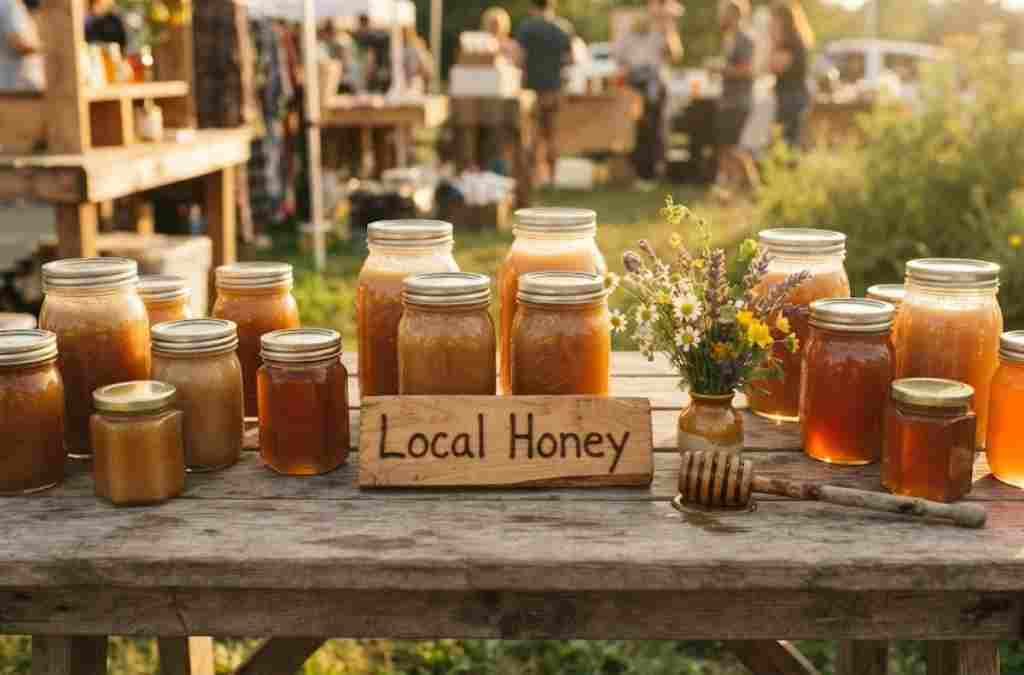
This is usually the first stop, and for good reason. Farmers markets put you face-to-face with the beekeeper. You can ask when it was harvested, sample a few varieties, and often negotiate a better price if you’re buying more than one jar. Markets rotate seasonally though, so check listings for your city before making a special trip.
2. Farm Stands and Apiaries Directly
Plenty of small beekeeping operations sell straight from their property. Some have honest little roadside stands with a cash box; others run a small shop attached to the apiary itself. Calling ahead matters here — many operate by appointment, especially during off-season months when the bees are dormant and stock is limited.
3. Local Co-ops and Health Food Stores
Independent grocers and co-ops often stock honey from beekeepers within a 50 to 100-mile radius, clearly labeled with the producer’s name. This is a solid middle ground if you want the convenience of a store visit without sacrificing traceability.
4. Beekeeping Associations and Honey Locator Tools
Nearly every state has a beekeepers’ association, and many maintain directories or locator maps listing members who sell directly to the public. These are gold if you’re new to an area and don’t yet know which markets or stands to trust.
5. Online Directories Built Specifically for Local Honey
Several websites exist purely to connect buyers with nearby producers by zip code. They’re worth a search if you live somewhere rural and can’t easily find a market, or if you want home delivery from a producer instead of a retailer.
6. Community Boards, Nextdoor, and Local Facebook Groups
Don’t sleep on this one. A huge number of backyard beekeepers never bother building a website. They post a few times a year when honey is ready and sell out fast through neighborhood groups. It’s often the cheapest and freshest option if you catch the post in time.
Here’s the part most guides skip entirely: “local” isn’t a regulated term. Anyone can slap that word on a label. So when you’re figuring out where to buy local honey near me, you also need to know how to verify it once you’ve found a seller.
One thing most articles gloss over: local honey isn’t cheap, and it isn’t always in stock. Expect to pay noticeably more per pound than what you’d spend on a supermarket bottle — you’re paying for small-batch labor, not industrial extraction. Availability also swings with the seasons. Late summer and fall tend to have the most stock right after harvest. While late winter and early spring can mean thin supply until the bees wake back up. If you find a seller you like, buying a few jars at once when stock is fresh isn’t a bad idea.
If you’re stocking up for a household that goes through honey quickly, ask sellers about bulk pricing — many will discount jars ordered in quantities of five or more. Local honey also makes a genuinely thoughtful gift, especially paired with a note about which flowers the bees foraged that season. A few sellers even offer gift sets with comb honey, beeswax candles, or flavored infusions alongside the classic jar, which is a nice option if you’re shopping for someone who already has honey covered.
Real, raw honey doesn’t need refrigeration and, frankly, shouldn’t go in the fridge since cold speeds up crystallization. Keep it in a sealed jar at room temperature, away from direct sunlight. If it crystallizes anyway, that doesn’t mean it’s spoiled — just set the jar in warm water for a few minutes and it’ll loosen back up.
Where can I buy local honey near me if I live in a big city?
City dwellers usually have the easiest time, ironically. Farmers markets, food co-ops, and specialty grocers in urban areas frequently stock honey from beekeepers within an hour or two’s drive. Rooftop and community garden beekeeping has also grown a lot, so check listings for hyper-local city apiaries too.
Is local honey actually better for seasonal allergies?
The theory is that consuming small amounts of local pollen helps your body build tolerance over time. Scientific evidence on this remains mixed and inconclusive. But a lot of people swear by a daily spoonful during allergy season. Even without the allergy benefit, you’re still getting a fresher, less processed product than store-bought alternatives.
How do I know if honey labeled “local” was actually made nearby?
Ask the seller directly where the hives are located, and don’t settle for a vague answer. A genuine local beekeeper can tell you the town or farm, roughly how many hives they manage, and when they harvested the batch. If a seller can’t answer basic questions like that, it’s worth being skeptical.
What’s the price difference between local honey and store-bought honey?
Local honey generally runs anywhere from 1.5x to 3x the price of standard supermarket honey, depending on your region and the variety. The extra cost reflects small-batch harvesting, minimal processing. And the simple fact that a backyard operation can’t compete with industrial pricing.
Can I buy local honey online and still trust it’s genuinely local?
Yes, plenty of small beekeepers ship directly from their own websites, which still counts as buying from the source even if you’re not physically visiting. The key is buying directly from the producer rather than a third-party reseller who repackages honey from unknown origins.



Y.S. Eco Bee Farms USA
Y.S. Eco Bee Farms USA is a trusted American wellness brand offering premium organic bee products. We provide pure, natural, and effective bee-based supplements made with sustainable sourcing and ethical beekeeping.
Y.S. ECo Bee Farms
Y.S. Organic Bee Farms
All Right Reserved Design By Example