
- Discount up to 35% for first purchase only this month.
- sales@ysecobeefarmsusa.com
- (+1) 3252088500

Curious if raw honeycomb is healthy or just a pretty snack? Here’s the real answer — straight from the hive, backed by nutrition facts, and honest about who should skip it. Discover why raw honeycomb benefits go beyond taste.
You’ve seen it on a cheese board, drizzled over a wedge of brie, or sitting in a jar at the farmers market with a little wax chunk floating inside. It looks rustic, expensive, and vaguely “healthier” than the honey bear in your pantry. But Is Raw Honeycomb Healthy, or is that just clever marketing on something that’s basically sugar with a fancy container?
Here’s the short answer: yes, Is Raw Honeycomb Healthy for most people, in moderate amounts. It’s one of the few foods you can eat almost exactly as nature made it — no heating, no filtering, no processing. But like anything sweet, the full picture matters more than a one-word answer. So let’s actually dig into what’s inside that wax, who benefits most, and who genuinely needs to be careful.
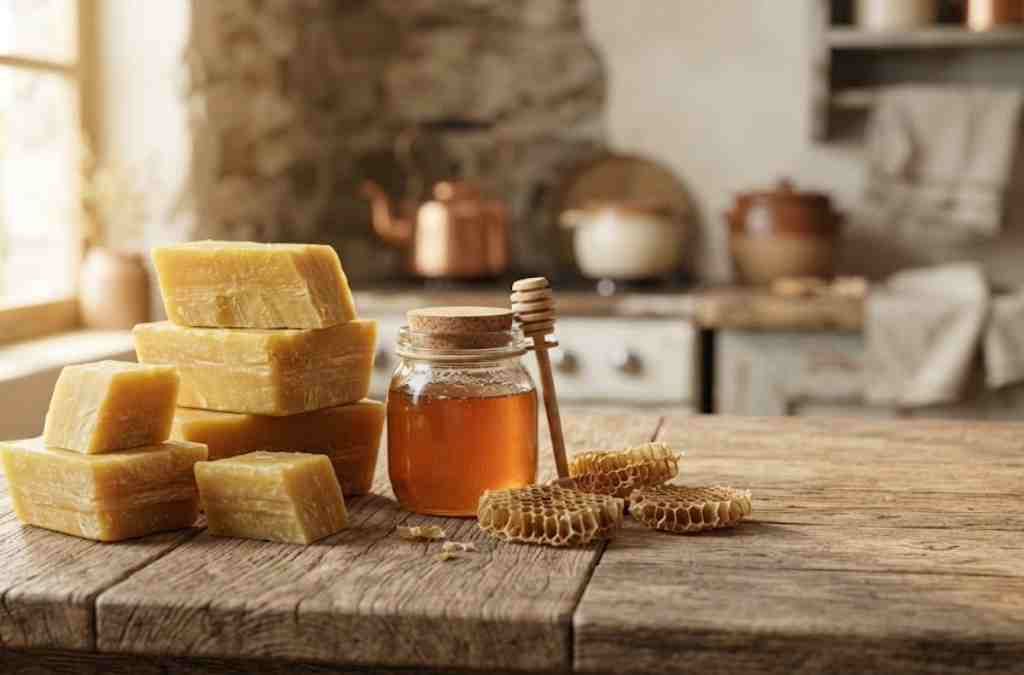
Honeycomb is the structure honeybees build inside their hive using beeswax they produce from special glands on their own bodies. They shape it into those perfect hexagon cells, fill each one with nectar they’ve collected and broken down into honey, then cap it with a thin wax lid to keep it fresh and sealed.
When you buy raw honeycomb, you’re getting that entire capped cell — honey and wax together, untouched by heat or machinery. Compare that to the honey bottle on your shelf, which has usually been warmed, filtered, and sometimes blended with syrups you’d never guess were there. That difference is exactly why so many people ask Is Raw Honeycomb Healthy in the first place — they want the version that hasn’t been stripped of anything.
Let’s get specific, because vague claims like “packed with nutrients” don’t actually tell you much. A one-tablespoon (about 21g) serving of raw honeycomb typically contains:
That’s a modest honey nutrition profile, not a superfood in the dramatic sense — but it’s a meaningfully better sugar source than refined white sugar or corn syrup, calorie for calorie.
This is where honeycomb earns its reputation. Understanding Is Raw Honeycomb Healthy requires looking at what the evidence actually supports:
So when people ask Is Raw Honeycomb Healthy compared to the honey bottle in the cupboard, the honest answer is: it’s the more intact, less-processed version of the same food — and that matters more than people assume.
| Factor | Raw Honeycomb | Filtered/Pasteurized Honey |
|---|---|---|
| Processing | None — straight from the hive | Heated and filtered |
| Enzymes & pollen | Fully intact | Often reduced or removed |
| Texture | Chewy wax + honey | Liquid only |
| Shelf life | Very long at room temp | Very long at room temp |
| Sugar content | Nearly identical | Nearly identical |
| Price | Usually higher | Usually lower |
The sugar content barely changes. What changes is how much of the original bee-made compounds survive the trip from hive to table.
If you’ve never tried it, the texture surprises most people. The wax is firm at first, almost like a slightly softer version of chewing gum, and it slowly releases warm, floral honey as you bite down. Some people chew it fully and swallow the wax; others chew out the honey and spit the wax out, similar to gum. Both are completely fine — beeswax isn’t digested, but it isn’t harmful in reasonable amounts either.
A few practical tips if you’re trying it for the first time:
This is the part a lot of blog posts rush past, and it matters. Even when considering Is Raw Honeycomb Healthy, it can carry spores of Clostridium botulinum, the bacteria behind botulism. Healthy adult digestive systems handle this without issue, but a few groups genuinely should not eat it:
Even for healthy adults, moderation is the operative word:
Is eating raw honey comb good for you?
Yes, for most healthy adults. When wondering Is Raw Honeycomb Healthy, remember it contains antioxidants, trace vitamins, and antibacterial compounds, and because it’s never heated or filtered, it keeps more of its natural enzymes and pollen intact than processed honey does.
What are the disadvantages of honeycomb?
The main downsides are its sugar content, the small chance of mild digestive discomfort from the wax if eaten in large amounts, and the risk of contamination if it’s sourced from an unreliable producer. It also carries the same botulism risk as any raw honey product for certain groups.
Is honeycomb better than regular honey?
Nutritionally, they’re very close — the sugar and calorie content is nearly identical. Honeycomb’s advantage is that it’s completely unprocessed, so it retains more enzymes, pollen, and propolis that filtering and heating can reduce in regular honey.





Y.S. Eco Bee Farms USA
Y.S. Eco Bee Farms USA is a trusted American wellness brand offering premium organic bee products. We provide pure, natural, and effective bee-based supplements made with sustainable sourcing and ethical beekeeping.
Y.S. ECo Bee Farms
Y.S. Organic Bee Farms
All Right Reserved Design By Example